In North America, people spend roughly 10 to 20 per cent of their income on food. Higher grocery bills come as a minor annoyance. In the developing world, where food already accounts for up to 80 per cent of people’s budgets, rising costs produce dire results. In an effort to keep food within reach, families in poor countries are forced to take drastic measures and make costly sacrifices:
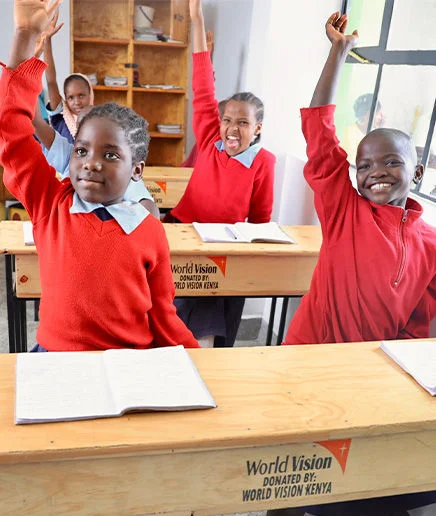
- Children are pulled out of school
- Children are forced into work, sometimes even in dangerous or unhealthy conditions
- Families stop visiting health clinics or eliminate medication purchases to save costs
- Families sell off their assets; first livestock, then farming equipment and tools
- The middling poor, those on $2 a day, are pulling children from school and giving up vegetables so they can afford rice
- Those on $1 a day are cutting back on meat, vegetables and one or two meals, so they can afford one bowl
- The desperate—those on 50 cents a day—face disaster
Broad-ranging effects include:
- Increased social unrest, rioting and displacement of peoples (including theft of livestock and tools, aid rations and aid vehicles)
- Stunted intellectual and physical development of both children and adults
- Increased risk of malnutrition for 35 million children, 10 million of whom are under five years old
- More children facing neglect and vulnerability as parents search for work and food
- Short- and long-term effects of a downturn in the economy as food takes a larger portion of overall spending
Stories from Around the World
Haiti
"He just started crying," recalls Jonise Siméuse, describing the death of her son, 9-month-old Claudeson. "He passed away in my arms … my heart broke when he died." Grief-stricken, the young Haitian mom immediately feared the worst for Claudeson's twin brother, Peterson.
Haiti has long suffered hunger's ravages. Now, the poorest country in the Western Hemisphere is teetering on the breaking point.
World Vision's development programs in our sponsorship projects work alongside families and communities to establish stable food sources.
Little Peterson could tragically have become another of hunger's ugly statistics. But Jonise sought help for her ailing son at a World Vision health post. A World Vision health worker then followed up with Jonise at her home and helped her enroll in a mothers club, where moms with malnourished children under 2 years of age learn about proper nutrition.
Jonise describes what happened next: "The ladies in the center came to my house … and showed me varieties of food that I could feed Peterson, and how to cook it. I gave him a lot of green leaves and manioc [a starchy root crop similar to cassava]."
Jonise also continues to receive monthly food aid distributions. Sitting in her lap, baby Peterson eagerly eats spoonfuls of porridge. Now a plump 1-year-old, he is proof that his mom followed her lessons, with World Vision there to encourage and support her.
Afghanistan
Families across Afghanistan, particularly in the underserved provinces of Badghis and Ghor, are buckling under the double blows of both a global food shortage and severe drought. In this context, it is unlikely that 11-year-old Fatima will realize her dream to become a doctor. Recently, her father engaged her to a local man in exchange for 300,000 Afghanis, the equivalent of US$6,000.
“We didn’t want to sell her,” Fatima’s mother, Susan, says wearily. “We didn’t want to do that. We wanted to wait until she was 20. But we were forced to…” Susan’s voice grows softer and trails off. “There was no other way.”
World Vision is seeking funding to provide food rations to the most desperate families in Badghis and Ghor Provinces. Fatima and two other siblings receive monthly food rations through World Vision’s Food for Education programme.
Mongolia
The global increase in food prices is adversely affecting children in Mongolia. As the cost of living rises in Mongolia school attendance drops, especially for the most vulnerable, causing children to work underground in gold mines, sell goods or herd livestock, in order to increase their family income.
World Vision helps children leave harmful and dangerous working environments by facilitating their return to school through informal education and scholarship programs.
And in Ulan Bataar Mongolia, the World Vision sponsorship programme is working to improve the overall situation of child health. Mothers learn about child nutrition and how to pass on the information to other mothers. Children attend Summer Health Strengthening camps where they receive treatment and nutritious food and dairy products, and their caregivers learn about the causes, symptoms and prevention of conditions like rickets and anemia.
East Africa
The Horn of Africa is at risk of a famine, the severity of which has not been seen since the mid-1980s. Yet all hope is not lost. In this current crisis it has been heartening to see how many people have been able to survive—and even thrive—despite desperate circumstances.
In anarchic Somalia—a difficult place to manage large projects—World Vision staff and local farmers implemented an irrigation plan on the Juba River last year, following a flood. The aim was to control future flooding while also making provision for times of drought. Combined with seed distributions and training by agronomists, this project has turned families in Bu'aale into self-sufficient farmers.
During the last great drought across the Horn of Africa, more than a million starving, displaced people filled Antsokia in central Ethiopia, an area with permanent unproductive swamps. World Vision and its partners developed a plan to use these swamps to irrigate dry areas. The Antsokia Valley, as a result, is now a place of successful intensive farming.
These projects may not be enough to save everyone in the Horn of Africa suffering in the current crisis. But they demonstrate that implementing a long-term plan can help communities diversify their food and water sources and increase their resilience in times of crisis.
Take action now! Click here.